Microwaves and Speed Ovens
Built-in Thermador microwaves, microwave drawers and speed ovens in San Francisco kitchens: the models we list, common faults, the E11 keypad code…

Specialized Thermador Appliance Repair in San Francisco
Mon–Sat: 8:00 AM – 7:00 PM
The high-voltage side stays closed to owners; we test it safely and explain the result in plain terms.
Thermador repair · San Francisco & the Bay Area
Thermador microwaves come in more shapes than most people expect: built-in microwaves above a wall oven, microwave drawers tucked under the counter, and speed ovens that combine microwave and convection cooking. They share a high-voltage section that is dangerous to open and a set of simple parts, such as door switches and fans, that fail often. We service these units across San Francisco and the Bay Area, and we handle the high-voltage side ourselves so you never have to.
The display works, the light comes on, the turntable or fan runs, yet food stays cold. The heating chain includes the door switches, a control relay and the high-voltage components, and the fault may be in any link. That is why we do not guess; we confirm it with testing. Our microwave not heating article lists the early checks.
A door that does not close firmly, a latch that has worn or a switch that sticks will stop a program from starting. A microwave drawer adds a motor and a track, so a drawer that moves slowly or jams on its way in can be mistaken for a power fault.
Touch panels can misbehave after a spill, after steam from nearby cooking or after a power flicker. A verified Thermador microwave code is E11, which means the touch buttons are not responding properly, possibly because of condensation on the keypad. Dry the area, give the unit a rest and try again before booking; if the code returns, it needs a visit.
Humming, grinding or a loud fan point to the cooling fan or the turntable motor. Sparking inside the cavity or a burning smell is a different matter and calls for switching the unit off immediately.
We start with the symptom you describe, then verify the supply, the display and the door. We test the door switches and latch assembly for correct operation before moving into the electrical circuit that makes heat. On speed ovens we also check the convection fan and element, as the unit can fail in one mode while another still works. Safety comes first: we discharge and test the high-voltage section in a controlled manner, and we do not let it run with a suspect door.
After the diagnosis you receive a written estimate. Nothing is repaired until you approve it, and if the answer is that repair makes little sense, we will say that too. The repair or replace post explains the factors to weigh.
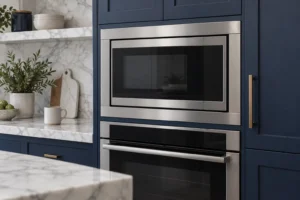
A built-in microwave sits in a cabinet or a wall oven stack, often with a trim kit that frames it flush with the cabinetry. Heat from an oven below it and cabinet closures around it limit airflow, which stresses the fan and electronics. A microwave drawer is set into a base cabinet, and its depth, rail and drain-free design mean a jammed drawer may be fighting cabinet alignment instead of a motor.
Speed ovens do double duty, so they sit in the wall with more vent space, and a blocked vent or a dirty filter shortens component life. Panel-ready fronts hide gaps, so a door that no longer lines up can be a small mechanical problem with a large effect. In older Bay Area homes shared circuits are common, and a microwave that trips the breaker may be on a line with other loads.
Never open the housing. A microwave stores energy even when unplugged, and the parts inside are not for owners to touch.
Switch the unit off at the breaker if you see sparks, smell burning, notice a door that is bent or will not seal, or if the cabinet around it feels hot. Do not keep trying a microwave that arcs, even if it seems to work after.
A microwave, a microwave drawer and a speed oven can look alike from the front and use quite different parts. The label is generally on the cavity edge, the door frame or behind the drawer front, and our guide on how to find a Thermador model number shows the usual positions.
Models we service here include the microwaves Thermador MB30WP repair, MB30WS and MBCS, and the speed ovens Thermador MC30WP repair and MC30WS.
It helps to note whether the problem began after a power outage, a remodel, a move of the unit or a heavy cooking session, and whether the light, the fan and the turntable still run. Those small details narrow the search before we arrive. Afterward we leave the unit tested and tell you what, if anything, to avoid, such as running it empty or using metal-trimmed dishes.
The heating chain has several links, including the door switches, a relay and the high-voltage section. Any of them can fail while the display and light still work. It needs testing by a technician; do not open the housing.
E11 means the touch buttons are not responding properly, possibly due to condensation on the keypad. Dry the panel, let the unit rest and try again. If the code returns, book a diagnosis.
The heating parts are similar, but the drawer adds a motor, rails and a front that must line up with the cabinet. We check both the mechanical and electrical sides.
No. A door that does not seal or latch correctly should not be used. Turn it off and arrange a visit.
Yes. The microwave, convection and grill functions use different components, so one mode can fail while the others still work.
Built-in Thermador microwaves, microwave drawers and speed ovens in San Francisco kitchens: the models we list, common faults, the E11 keypad code…
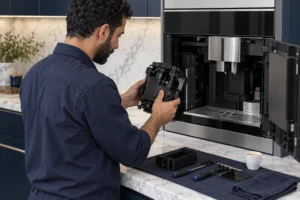
Built-in Thermador coffee machines that stop brewing, leak, froth poorly or flash a fault are diagnosed in your San Francisco kitchen, with…
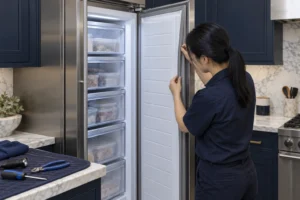
Repair diagnosis for Thermador column freezers with frost buildup, soft food, ice maker trouble or odd noises in San Francisco and Bay…
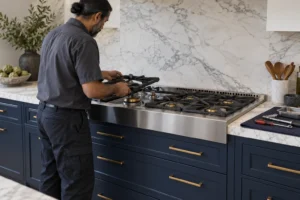
Burners that click without lighting, induction zones that go dark, griddles that stay cold or a glass surface showing a code: we…
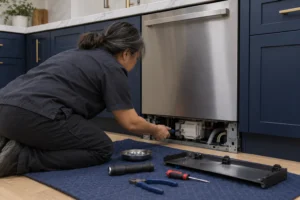
A Thermador dishwasher that leaks, will not drain, shows a fault code or leaves dishes wet is diagnosed in your San Francisco…
Share a few details and we’ll confirm an appointment. Prefer to talk? Call us and we’ll help right away.