

Specialized Thermador Appliance Repair in San Francisco
Mon–Sat: 8:00 AM – 7:00 PM
Deciding whether to repair or replace a built-in Thermador appliance depends on more than age. These are the factors that matter for flush, panel-ready Bay Area kitchens.
Thermador repair · San Francisco & the Bay Area
Few kitchen decisions feel as loaded as this one. An appliance fails, the technician says what is wrong, and you must decide whether to fix it or begin the hunt for a replacement. With a built-in Thermador appliance the decision has more layers than with a freestanding one, because replacing a unit often means touching cabinetry, countertops, ventilation or gas and electric supplies. Starting with the right questions makes the choice easier.
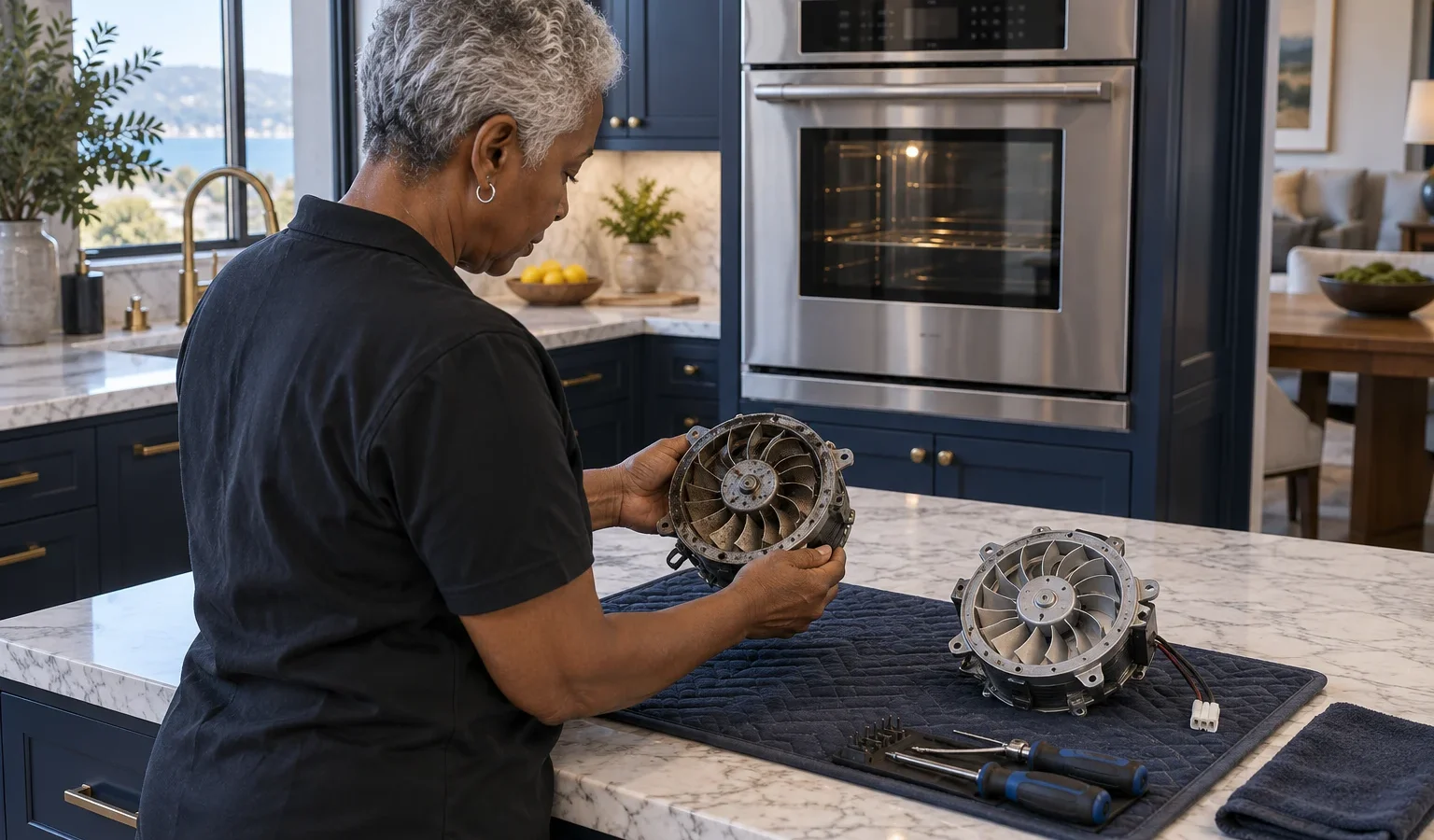
People often ask about age first, but age by itself says little. A well-kept appliance can serve for a long time, and a young one can suffer an early failure. What matters more is what failed and why. A worn igniter, a clogged drain pump, a fan motor or a door gasket is a contained problem with a clear fix. A failure in a sealed refrigeration system, repeated control board faults, or damage from a leak that reached several parts points to a more involved repair. Ask the technician to explain the fault in plain terms and say whether it is likely to be isolated or a sign of wider wear.
Built-in appliances are chosen to fit a cutout. A new model may have a different opening, different venting needs or a different electrical or gas connection. In older San Francisco flats and row houses, utility connections can be limited, and a change in power or gas requirements can bring in other trades. For a rangetop or a hood, ducting is part of the decision; a replacement that moves more air may expose an old duct that was never up to the job. Think about the whole system, not only the box that failed.
A good technician answers these honestly, even when the honest answer is that replacement makes more sense.
Our visit begins with a diagnosis. You then receive a written estimate describing the repair, and nothing proceeds until you approve it. If we think a repair is a poor choice, we say so, and you are free to decline. We do not sell appliances or push you toward one outcome. The decision belongs to you, and the aim is to give you facts so that you can make it with confidence.
If your problem sits in a specific appliance, the matching service page explains what we diagnose. We repair refrigeration through our Thermador refrigerator repair service, cooking appliances through Thermador range repair and Thermador wall oven repair, and ventilation through Thermador range hood repair. For help with identifying your unit, our model number guide lists where the labels hide, and the common problems index points to symptom guides.
Do not overlook what surrounds the unit. A replacement oven beside a refrigerator column, or a new hood above a rangetop, changes heat, airflow and clearances for its neighbors. A repair leaves those relationships as they are, which can be a quiet advantage.
Start by naming the fault. Decide whether it is a contained problem or a sign of broader wear. Check the fit of any replacement against your cutout and supplies. Compare the disruption of each path as well as the money. Then choose the option that leaves the kitchen working the way you want. If you are unsure, a diagnosis visit gives you facts without committing you to the repair.
No. Age is one input. The fault, the availability of parts and the effort of installation matter just as much.
Yes. We diagnose first, give you a written estimate, and you decide whether to go ahead.
A discontinued model is no longer sold new, but that alone does not mean it cannot be repaired. We tell you honestly what is practical.
Only if both have real problems or you are planning a remodel. A failure in one does not mean the neighbor is about to follow.
You do. Nothing is repaired without your approval.
Share a few details and we’ll confirm an appointment. Prefer to talk? Call us and we’ll help right away.