

Specialized Thermador Appliance Repair in San Francisco
Mon–Sat: 8:00 AM – 7:00 PM
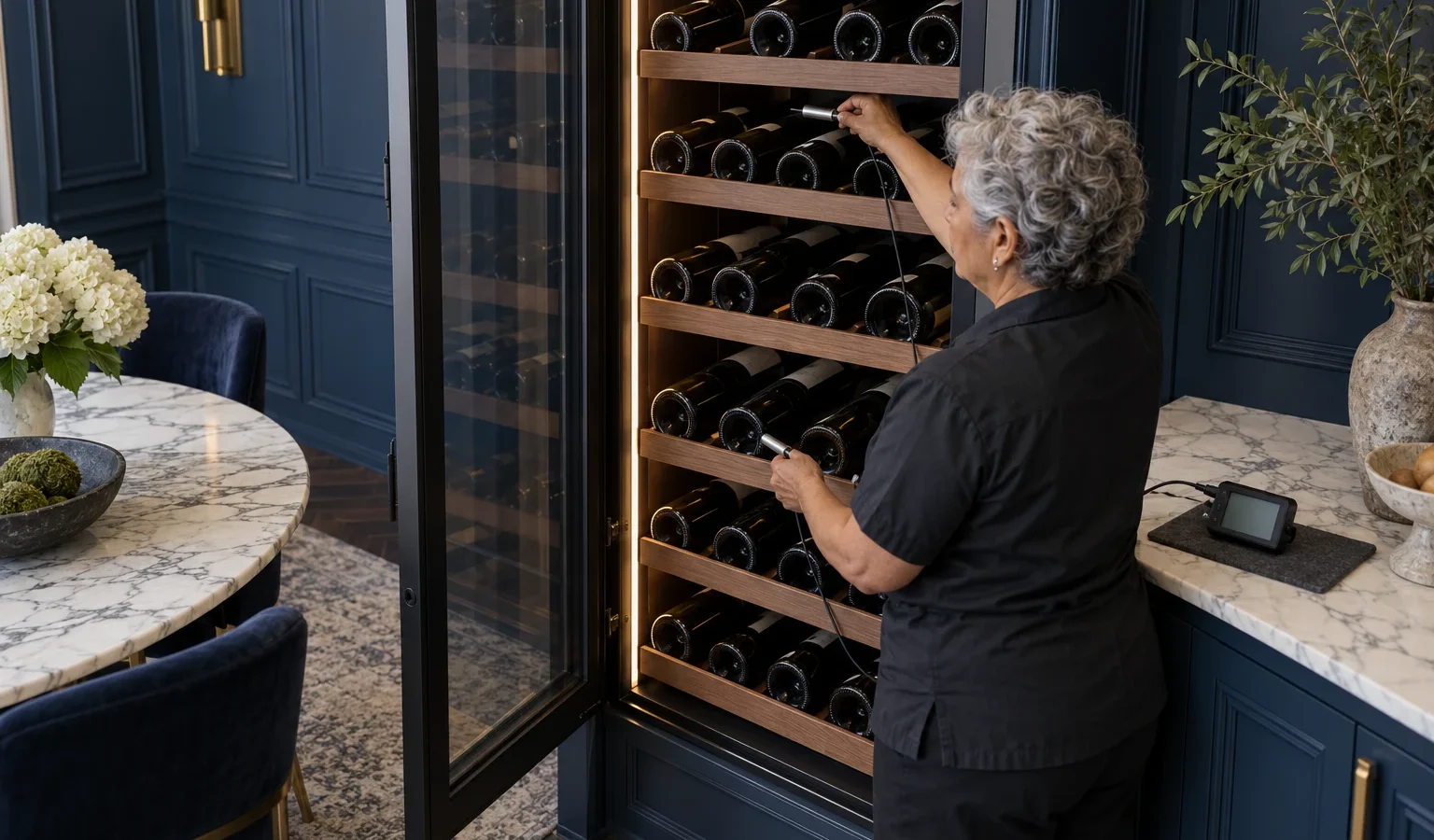
A Thermador wine column or under-counter cooler that drifts warm and cool is usually reacting to door habits, zone settings, room heat or airflow around the cabinet.
Thermador repair · San Francisco & the Bay Area
Temperature swings in a Thermador wine column usually trace to what is around the unit: a door left ajar or not sealing, a zone set differently from what you think, heat from a nearby oven or sunlight, or restricted airflow in the cabinet. Compare the display with a separate thermometer over a day before concluding the cooling system is at fault.
Thermador wine columns are built with separate zones, and each one has its own set point. The T18IW905SP has two separate temperature zones that each adjust from 41°F to 68°F. The larger T24IW905SP has three separate zones with the same 41°F to 68°F range. A bottle in the top zone can be at a different temperature from one in the bottom, which is by design and can look like a swing if you only check one shelf.
Under-counter units follow the same idea. The T24UW915LS provides two wine storage temperature zones, and so does the T24UW925LS, with two separately adjustable zones. Before logging any swing, confirm which zone each reading and each set point refers to. Write down the set points for every zone, then compare against a thermometer placed at the same shelf.
Columns are controlled from a TFT panel: the T18IW905SP uses a TFT panel and the T24IW905SP has a TFT control panel managing column functions. A display shows a set point and, on many panels, the current temperature, but both can change when a zone is adjusted by a visitor or by a stray touch. Check the panel for a changed set point, and note the time you see it.
If the panel numbers move normally but a separate thermometer disagrees by a lot, mention it when you call, since sensors and displays can differ from the true bottle temperature.
Every opening lets warm room air in, and a tall column pulls it in quickly. A door that does not click shut, a gasket folded at a corner or a bottle sitting against the seal can allow a slow leak that makes the unit cycle harder. Run a sheet of paper along the gasket: it should resist pulling out evenly around the door.
Under-counter models add glass. The T24UW905LP uses a SoftClose door and a tempered glass door that resists UV light, which reduces light exposure but does not stop sun heating the glass or the surrounding cabinet. A unit by a west-facing window can swing with the afternoon sun.
A column is flush with cabinetry, so heat from an oven, a dishwasher, or a poorly ventilated cabinet side can push the compressor into long cycles. Look at what is next to the unit and whether the kick area or grille is blocked by boxes or mats. The T18IW905SP is listed at 83 3/4 inches high, 17 3/4 inches wide and 24 inches deep, which leaves little room, so installation clearances matter.
A new load of warm bottles will also lift the temperature. Add bottles gradually, not twenty at once, and see if the swing follows the loading.
Put a small thermometer on the shelf nearest the display, leave it for a full day and note the reading at breakfast, mid-afternoon and bedtime without opening the door more than necessary. A steady line with small movement after you load bottles or open the door is normal. A reading that climbs through the afternoon and falls overnight points at room heat or sunlight, and a reading that never settles points at the unit.
Repeat the log for a second day after moving anything that could affect airflow. Two days of matched notes make it much easier for the technician to separate a placement problem from a cooling problem.
You cannot see the compressor behavior, the fan, the damper or the sensors. A technician measures temperatures at several points, checks that fans run, tests the sensors against known values and looks for refrigerant side problems. If bottle temperature rises steadily and the compressor never seems to stop or never starts, stop adjusting and call. The T24UW925LS needs 115 V, 60 Hz power, so a weak supply can also lead to odd cycling.
Gather the model and serial from the rating label, the set point for each zone, the readings from your thermometer with times, any noise and when you first noticed it. Our Thermador wine cooler repair page covers booking, with wine columns and under-counter refrigeration for model information, and the T18IW905SP and T24UW925LS pages.
Thermador wine storage unit models with their own repair notes:
Yes, if the zones are set differently. The T24IW905SP has three separate zones, so check each zone’s set point before assuming a fault.
It can add heat to the glass and cabinet even though the tempered glass door resists UV light. Shade the area and watch whether the swings ease.
If the temperature has drifted well away from your set points, move valuable bottles somewhere stable until the unit is inspected.
Share a few details and we’ll confirm an appointment. Prefer to talk? Call us and we’ll help right away.