Range Hood Repair in San Francisco
Hood fans that run weak, rattle, will not start, or downdraft vents that will not rise are traced in place by our…

Specialized Thermador Appliance Repair in San Francisco
Mon–Sat: 8:00 AM – 7:00 PM
Hoods, downdraft vents and blower modules all move air, but they fail differently. Here is how to tell which one you have and what to check.
Thermador repair · San Francisco & the Bay Area
Thermador ventilation covers more than the stainless canopy over a range. It also includes downdraft vents that rise out of a counter, hood inserts that disappear into a custom cabinet, and separate blower modules mounted away from the kitchen. A noisy fan in a Pacific Heights flat and a downdraft that sticks in a Noe Valley remodel can have little in common except the symptom: the air is not moving the way it did.
All are currently sold. We do not state airflow, widths beyond the one shown, or finishes for any of them. Wall hoods, island hoods and inserts differ in how they are mounted and ducted, and your label identifies which you have.
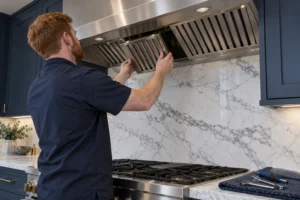
On a hood the label is usually behind the grease filters, so remove a filter and look along the inside of the canopy. A downdraft vent usually has it on the side of the chassis or under the counter, and a blower module on its housing. See how to find your model number for details.
Covered in depth in Thermador range hood fan not working. Power, controls, the blower and the wiring between hood and remote module are all candidates.
A downdraft vent is a mechanical lift as well as a fan. If it sticks, grease and debris in the track, a blocked path or a fault in the lift mechanism could be responsible. We cover the symptom in Thermador downdraft won’t rise.
Clogged filters are the commonest cause, followed by a blocked duct or an outside damper stuck closed. With long runs through a building wall, a technician checks the ducting as part of the diagnosis.
Rattling, humming or a scrape that tracks fan speed usually points to the blower wheel or its motor. Switch the fan off if the noise is new and loud.
Dead lights or unresponsive controls can be a simple lamp or a control board; no one can tell by looking.
Stay off ladders and do not take panels or ducting apart. If you smell burning or see sparks, power the hood off at the breaker.
Book through Thermador range hood repair. A visit begins with diagnosis, then a written estimate; nothing is done without your approval. Since a hood sits above a cooking surface, our Thermador cooktops guide is a useful companion.
A wall hood, an island hood and a custom insert are mounted and ducted in different ways. A long duct run through a flat or townhouse wall, a bend close to the blower or an outside cap with a stuck damper all weaken airflow without any fault in the hood itself. Hillside homes with long rooflines often route ducts further, which we account for when we plan the visit. Tell us which type you have, and whether the blower is in the canopy or somewhere else.
A hood captures air above the cooking surface, while a downdraft vent pulls it from behind or beside the cooktop and often rises from the counter on request.
A greasy blower wheel, clogged filters or a blocked duct produce that pairing. Check the filters first and book a visit if the noise remains.
Sometimes, but modules are often mounted in an attic, wall or outside. We tell you in advance what access we need.
Follow the schedule in your owner manual. Heavy frying and wok-style cooking in a busy kitchen call for more frequent cleaning.
Yes. The insert is a hood like any other for diagnosis. Give us the model number from behind the filter or on the blower housing.
Hood fans that run weak, rattle, will not start, or downdraft vents that will not rise are traced in place by our…
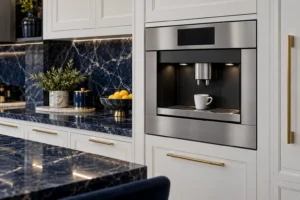
Built-in Thermador coffee machines in San Francisco kitchens: models TCM24PSN and TCM24TSN, water and milk system faults, code E0510 and safe daily-care…
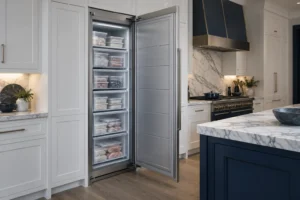
Thermador column freezers in Bay Area kitchens: the models we list, where the label hides, common frost and ice-maker complaints, and safe…
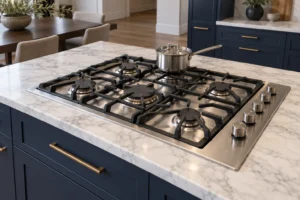
Induction, gas and rangetop Thermador cooktops in San Francisco kitchens: listed models, label spots, error codes, and safe checks before you book.
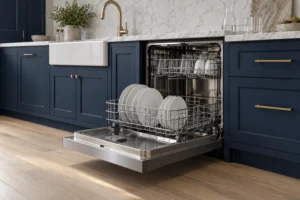
Thermador dishwashers for San Francisco homes: Sapphire and current models, leaks, drain and heat faults, the verified E-codes, safe checks and how…
Share a few details and we’ll confirm an appointment. Prefer to talk? Call us and we’ll help right away.