Range Hoods and Ventilation
Thermador hoods, downdraft vents and blower modules in San Francisco and Bay Area kitchens: the models we list, common faults, label locations…

Specialized Thermador Appliance Repair in San Francisco
Mon–Sat: 8:00 AM – 7:00 PM
Ventilation is the part of a kitchen you only notice when it fails: a smoky room, a greasy film, a fan that rattles. We trace the fault from hood to duct.
Thermador repair · San Francisco & the Bay Area
A good ventilation system clears the air before the smell reaches the living room. When it stops working, the symptoms spread: windows fog, a haze hangs over the cooktop, and the fan that used to hum now rattles or barely moves air. Thermador ventilation covers wall hoods, island hoods, custom insert hoods with separate blowers, and downdraft vents that rise from behind a cooktop. We repair these across San Francisco and the Bay Area, and the first step is always a diagnosis, not a guess at the part.
The cause may be a lost supply, a failed switch or control, a motor that has seized, or a blower module that no longer receives its signal. On hoods with a remote or insert blower, the control in the hood and the blower above the ceiling or on the roof can fail independently, so the fault may sit a long way from the switch you press.
Weak airflow is among the most common ventilation complaints and rarely means the motor is dying. Saturated grease filters, a damper that sticks half shut, a crushed duct section, a wall cap blocked by lint or nesting material, and a blower wheel coated in grease all choke the flow. We follow the air path from the cooktop to the outside.
Rattling, humming or a rhythmic thump can come from a loose filter, an unbalanced blower wheel, a duct that has come loose and now vibrates against framing, or a motor bearing that is wearing. A change in sound after a remodel often points to an installation detail rather than a failed part.
Dead lamps, buttons that no longer respond and a display that blinks may be separate faults from the fan. A hood can ventilate perfectly well with a control fault, and the reverse is true as well.
A downdraft that sits flush with the counter must lift out of the cooktop edge when it is needed. When it will not, we look at the lifting mechanism, the position sensing, the blower beneath and anything that has fallen into the slot. Our guide on a downdraft that will not rise goes through the most common causes.
We ask when the change occurred and what was happening in the kitchen at the time: heavy cooking, a recent clean, a remodel, a power cut. We then check the supply, operate each speed, listen to the blower and measure whether air leaves the building. Only then do we decide whether the problem lies in the hood, the control, the blower or the duct. You receive a written estimate, and no repair is carried out without your approval.
Leave the housing, the blower and the wiring alone. A blower motor can start without warning, and grease deposits are a fire risk when disturbed.
If you smell something burning, see sparks, or hear grinding from the blower, switch the hood off at the breaker and ventilate by opening windows. Do not cook over a gas burner while a hood is failing to extract; if you ever smell gas, leave the building, avoid switches and call the gas utility or 911 from outside. A hood with heavy grease build-up should not be run on high until it has been cleaned and inspected.
Hoods, blower modules and downdraft vents look similar from the outside and take very different parts. We also cover the PH48GWS, a 48-inch hood in the Professional / Pro Grand ventilation line, the HDDB30WS, the downdraft vents UCVM30XS and UCVM36XS, and the blower modules VTD600P and VTI1FZ. The label is usually behind the grease filters on a hood, or on the chassis of a blower module. Our Thermador range hood guide explains where to look.
Book through the contact form and we agree on a window within Monday to Saturday, 8:00 AM to 7:00 PM. Tell us whether the hood is a wall, island or insert design and whether the blower is inside the hood or elsewhere. Our technician arrives with ladders and protection for your counters, runs the checks, explains what was found, and provides the written estimate. If the cause is a duct or a wall cap outside our scope, we say so plainly.
A fan that will not start or moves little air is covered in why a Thermador range hood fan stops working. Because hoods and cooking surfaces are usually installed together, you may also want Thermador cooktop repair and Thermador range repair.
We serve San Francisco and the wider Bay Area, including row houses with narrow stairs and hillside homes where the hood vents through several floors. See our service locations for the areas we cover.
Most often the problem is in the air path, not the motor: saturated grease filters, a sticking damper, a crushed or disconnected duct, or a blocked wall cap. A technician follows the path from the hood to the outside before recommending a part.
Yes. Many insert hoods and some island hoods use a separate blower in an attic, wall or exterior location. We check both ends, since a fault at the blower can look like a fault in the hood.
No. Forcing it can bend the lifting mechanism or crack the trim. Clear the slot while the unit is off, note any message, and book a visit if it still will not rise.
If you can, yes, because clean filters let us judge airflow honestly. Follow the care instructions that came with the hood, refit the filters securely and do not use harsh tools on the mesh.
We can identify them and explain what we found. Where a duct needs rework by a different trade, such as sheet metal or a roof cap, we tell you so and describe it in the written estimate.
Thermador hoods, downdraft vents and blower modules in San Francisco and Bay Area kitchens: the models we list, common faults, label locations…
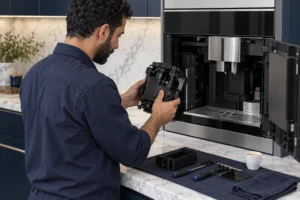
Built-in Thermador coffee machines that stop brewing, leak, froth poorly or flash a fault are diagnosed in your San Francisco kitchen, with…
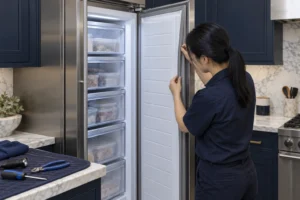
Repair diagnosis for Thermador column freezers with frost buildup, soft food, ice maker trouble or odd noises in San Francisco and Bay…
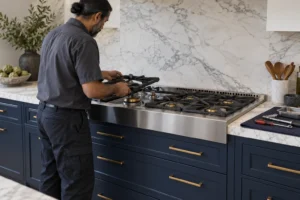
Burners that click without lighting, induction zones that go dark, griddles that stay cold or a glass surface showing a code: we…
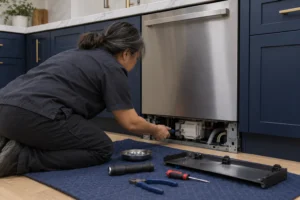
A Thermador dishwasher that leaks, will not drain, shows a fault code or leaves dishes wet is diagnosed in your San Francisco…
Share a few details and we’ll confirm an appointment. Prefer to talk? Call us and we’ll help right away.