

Specialized Thermador Appliance Repair in San Francisco
Mon–Sat: 8:00 AM – 7:00 PM
The hood light works but the fan stays silent, or the fan runs weakly and the kitchen fills with smoke. Learn the likely causes and the checks that are safe to make.
Thermador repair · San Francisco & the Bay Area
Cooking without ventilation is a miserable experience: the steam hangs at ceiling height, the smoke alarm is a heartbeat away, and the grease settles on cabinet fronts. When the fan on a range hood stops, or runs but does not seem to pull anything, most owners assume the motor died. Sometimes it did. Just as often, the fan is fine and the problem is a switch, a filter, a duct or a damper that closes at the wrong moment.
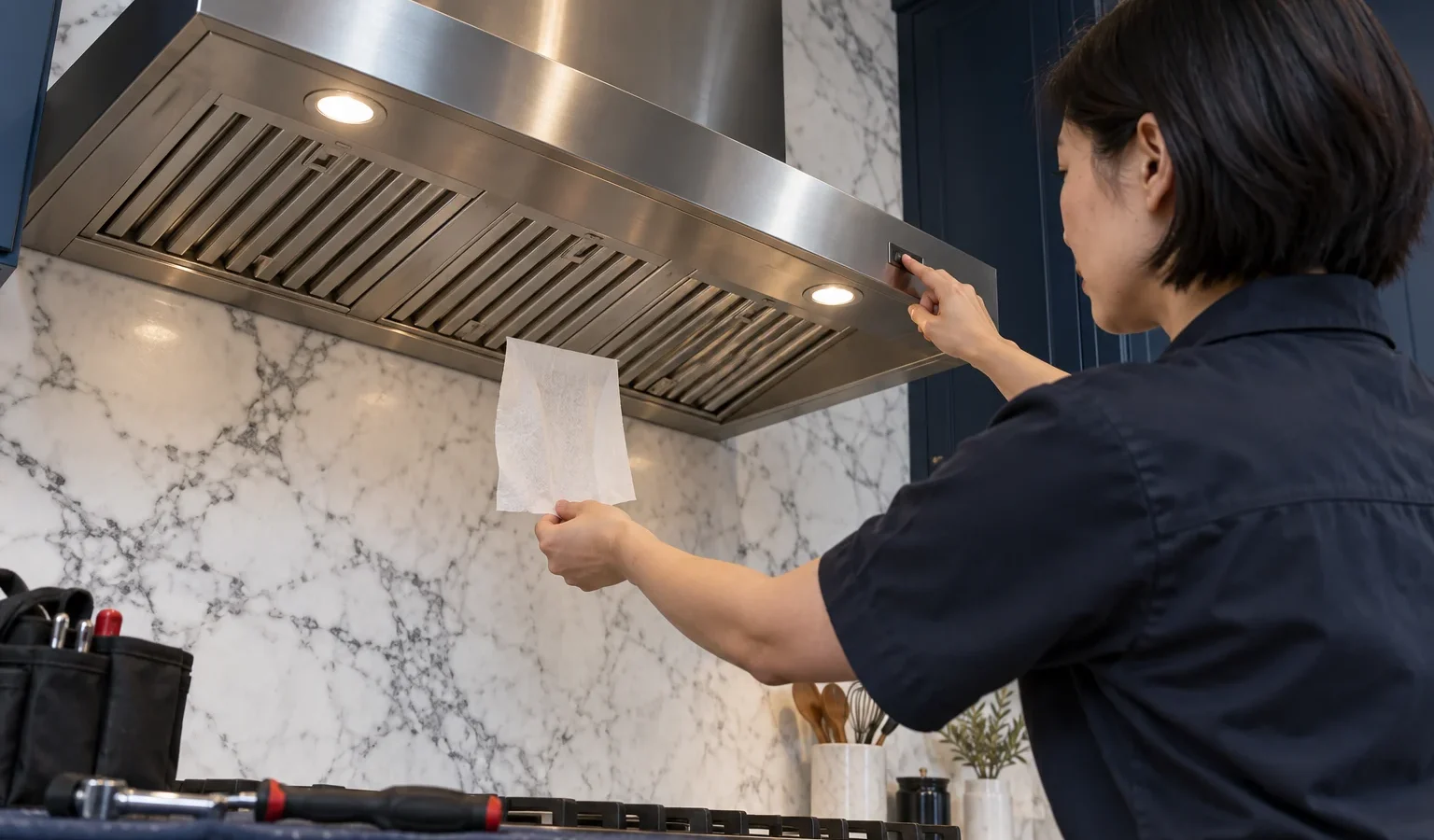
Listen before you touch anything. If the light works and the fan is completely silent at every speed, the blower is not being asked to run or cannot respond. If the fan hums but does not turn, the motor is trying and failing. If the fan spins but air barely moves, the problem is probably restricted airflow. If the fan runs only on the highest setting, a speed control may be failing. Tell the technician which of these matches your hood; it shortens the diagnosis a great deal.
Also note how the hood is built. A wall hood, an island hood and a custom insert are all different in how they move air. An insert has a separate blower module, sometimes mounted far from the cooking surface, and the fan control may live in a remote location. That layout means the visible hood can look healthy while the blower is the failing part.
Do not remove the hood’s interior panels, the blower housing or the cover over the wiring. Do not run the hood for long with the filters removed. Do not use a ladder to reach an island hood’s ductwork; many are suspended, heavy and tied to the ceiling structure. If you smell burning, hear a grinding sound, or see sparks at the controls, shut off the breaker and keep the hood off. If you smell gas at any time, leave the home, switch nothing, and call the gas utility or 911 from outside.
Older San Francisco flats and row houses often route ductwork through narrow walls with several turns before it reaches the exterior. A remodel can swap in a bigger hood without upgrading the run behind it, and the new blower then pushes against a duct that was sized for something modest. In hillside and multi-level homes, a long vertical run adds resistance and encourages grease to collect in low spots. When the problem is airflow rather than motion, that history matters as much as the fan itself.
We confirm which parts respond, from the wall switch to the control module to the blower, and we check the filters, damper and visible duct before looking at the motor. If the blower module sits remotely, we inspect it where it lives. After diagnosis you receive a written estimate, and we begin work only once you approve it.
The model number is usually behind the grease filters or on the inside of the canopy. Our PH48GWS page covers a Professional / Pro Grand ventilation hood, and HDDB30WS covers another hood. For blower modules, see VTD600P and VTI1FZ.
Book when the fan will not run after the breaker and filters are checked, when it hums without spinning, when it runs but moves little air, or when a burning smell, vibration or grinding is present. Details about our visit are on the Thermador range hood repair page, and you can browse the Thermador range hoods overview first.
The light and the fan run on separate circuits and controls. A working lamp only proves that the hood has power.
It depends on how you cook. Heavy frying and searing build grease faster than light cooking, so clean them whenever you can see or feel residue.
Yes. A blocked duct or stuck damper lets the motor run normally while almost no air leaves the kitchen.
If it shows no sign of burning, vibration or grinding, light use is reasonable. Stop if anything changes.
They can, because the blower is separate from the controls. A silent hood may have a perfectly healthy control and a failed blower elsewhere.
Share a few details and we’ll confirm an appointment. Prefer to talk? Call us and we’ll help right away.