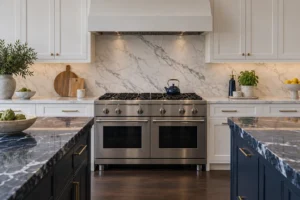
Ranges
Pro Grand, Pro Harmony and other Thermador ranges in San Francisco kitchens: fuel types, model label spots, burner and oven complaints, and…

Specialized Thermador Appliance Repair in San Francisco
Mon–Sat: 8:00 AM – 7:00 PM
Professional-style ranges fail in specific ways. We work out which burner, igniter, sensor or board is behind yours.
Thermador repair · San Francisco & the Bay Area
A professional-style range is the centerpiece of many remodeled Bay Area kitchens, and it asks a lot of its parts: open gas burners, a large oven cavity, electronic controls and, on some models, both gas and electric supply. When a burner will not light or an oven stops heating, the symptom rarely names the cause. We repair Thermador gas, dual-fuel and induction ranges in San Francisco and the Bay Area, diagnosing first and explaining each finding before you decide.
The igniter, the burner cap seating, moisture in the ignition path and a spill near the electrode are the usual reasons. Thermador gas ranges use the Star burner, and a burner that keeps clicking after it is lit points to the ignition circuit sensing the flame badly. See Thermador range burner won’t light and Thermador Star burner keeps clicking for the owner-side picture.
Blocked ports, a burner head that has been put back crooked and a gas supply issue all produce odd flames. If you ever smell gas, leave the home, avoid switches, and call the gas utility or 911 from outside.
The bake element, the igniter on a gas oven, the temperature sensor and the control board each play a part. A sensor that reads wrongly makes the control cut heat too early or too late. Our article Thermador range oven not heating explains the typical split between gas and electric ovens.
A door latch that will not release or lock can stop a clean cycle and leave the oven unusable. The latch motor, the switch and the wiring are all on the list.
A range cools its control area with a fan, and a fan that fails can shut down the oven to protect the electronics. A dark display, unresponsive knobs, or lights that blink in a pattern can point to the control board or a sensor.
Professional and Pro Harmony ranges signal faults through E codes and two-digit blue-light blink patterns. Write down the exact sequence, including how many times each group blinks. Examples we cover include EEPROM error E1 (blink 22), temperature sensor open E3 (blink 10), temperature sensor shorted E4 (blink 12), no cooling fans E9 (blink 43) and door latch fault E11 (blink 44). A sensor code means the circuit reads wrongly, and it does not always mean the sensor itself has failed, which is why we test before replacing. The full set is in the Thermador error codes library. We do not publish reset sequences.
A gas range needs a safe, correctly connected supply, an igniter that sparks and a burner that carries flame. A dual-fuel range adds an electric oven to gas burners, so it needs both a gas line and a suitable electrical supply, and a fault in one does not always point to the other. An induction range depends on the cookware and the electronics beneath the glass. We confirm the fuel type early because it changes which tests apply.
A freestanding range sits against a wall and between cabinets, so the location of the gas shutoff, the flexible connector and the anti-tip bracket matters. A range pushed back too far can crush the line or the cord. Rangetop-style ranges in a remodeled kitchen often share a hood with a powerful blower, and strong draft can disturb the flame at the burner and cause ignition problems that look like a fault. Our Thermador range hood repair page covers the ventilation side.
In older flats and hillside homes we find gas lines that were extended during a remodel and shutoff valves that are stiff or only partly open. We note these during a visit, but we leave gas fitting work to a licensed gas fitter, and nothing is touched on the gas side without a safe plan and your approval.
Do not remove panels, probe live wiring, or work on gas connections. A gas smell means leave the home, avoid switches, and call from outside. A burning smell or sparks means switch the range off at the breaker.
Ranges vary by width, fuel and series, and the parts differ accordingly. The model label is usually along the oven frame or inside the storage drawer area. Our Pro Grand listings include the PRD486WDGU dual fuel range and the PRG486WDG gas range, and the Pro Harmony listing is the PRG486WDH range. Read how to find your Thermador model number if the label is hard to reach.
We start with your description, check the supply, the ignition, the oven, the sensors and the controls in an order that fits the symptom, and report what we found. You get a written estimate, and nothing is repaired without your approval. Book through the contact page.
A burner that fails alone usually has a seating, moisture or igniter issue in that burner, not a gas supply fault. Resetting the cap and drying the area is a safe first step, and a technician takes it from there.
Leave the home, avoid switches and lighters, and call the gas utility or 911 from outside. Do not try to find the leak yourself.
Write the code down first. A single controlled power reset is acceptable, but a code that returns means the cause is still there and needs a diagnosis.
It needs both gas and electrical knowledge. We confirm the fuel type first so the right tests are used.
Yes. We plan access to the connections before the visit and move the range only as far as needed.
Pro Grand, Pro Harmony and other Thermador ranges in San Francisco kitchens: fuel types, model label spots, burner and oven complaints, and…
Built-in Thermador coffee machines that stop brewing, leak, froth poorly or flash a fault are diagnosed in your San Francisco kitchen, with…
Repair diagnosis for Thermador column freezers with frost buildup, soft food, ice maker trouble or odd noises in San Francisco and Bay…
Burners that click without lighting, induction zones that go dark, griddles that stay cold or a glass surface showing a code: we…
A Thermador dishwasher that leaks, will not drain, shows a fault code or leaves dishes wet is diagnosed in your San Francisco…
Share a few details and we’ll confirm an appointment. Prefer to talk? Call us and we’ll help right away.