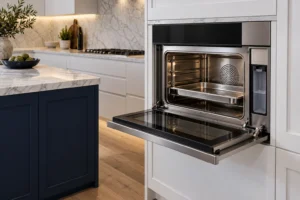
Steam and Combi Ovens
Thermador steam and combi-steam ovens in San Francisco and Bay Area kitchens: the models we list, where the model label sits, common…

Specialized Thermador Appliance Repair in San Francisco
Mon–Sat: 8:00 AM – 7:00 PM
Steam ovens add water, a generator and a drain to a normal oven; we start with that water path and work outward.
Thermador repair · San Francisco & the Bay Area
Steam changes how an oven behaves. A Thermador steam or combi-steam oven mixes moist heat with convection, so it carries a water system, a steam generator, a drain path and a sealed cavity on top of everything a normal oven has. That is why a steam oven fault rarely looks like a regular oven fault. We repair these built-in ovens in San Francisco and around the Bay Area, and our work starts with the water side of the machine.
A message about the tank, a tank that will not seat or a steam function that never produces steam is the leading reason for calls. The cause may be a tank that is not pushed in all the way, a float or level sensor that misreads, a pump that does not draw or, on plumbed units, a closed supply valve. Read steam oven water tank warning for the checks to make at the counter.
Puddles under the door, condensation running down the front of the cabinet or a damp smell after cooking suggest a door seal that is not closing evenly, a drain that is slow or a leak at a connection. Sealed cavities also build limescale over time in this area of the Bay, and scale is a frequent hidden cause of weak steam.
A steam oven may heat in dry mode but not in steam, or show a temperature that never settles. Temperature sensors, the convection fan, the heating element and the steam generator each play a part, and the fault depends on which program fails.
A door that will not close fully can stop steam programs from starting, and a blank screen, unresponsive keys or a stuck program can come from the control board or a loose connection. Homes with Home Connect may also see network messages that do not affect cooking.
We begin with the water path, because it explains most steam faults. We look at the tank, its seat and connector, the pump or inlet, the steam generator and the drain. Then we check the cavity seal and door, followed by the electrical side: sensors, elements, fan and the control board. If the unit shows a code, we read it before disturbing anything.
Because an oven that holds water and heat can develop scale, we also look for mineral build-up and explain whether descaling or a part is the answer. You see the written estimate before any repair and nothing proceeds without your approval.
Steam ovens are built into a cabinet tower, frequently beside or beneath a standard wall oven, and some are set low enough that the tank is at knee height. Tank access matters for the owner; clearances matter for us. A plumbed unit has a water line with a shutoff, and a tank-fed unit needs a tank that clicks home. Both need the cavity to drain, and a drain that is kinked, pinched by cabinetry or slow can cause standing water or error messages.
Combination and combi-steam ovens add a second heat source and fan, which makes the diagnosis more layered than a plain steam cavity. Panel-ready doors and flush trim leave little visible space around the front, so a gasket that has shifted can be hard to spot without looking along the seal in good light.
Ventilation counts too. A steam oven releases moisture on opening, and cabinets that trap that moisture can affect the electronics nearby. For wall-oven neighbors in the same tower, see Thermador wall oven repair.
Do not run descaling products that are not approved for your oven, and do not open the back or sides. Never test wiring or bypass the door switch.
Switch the oven off at the breaker if you see water leaking toward the floor or cabinet, notice a burning smell or sparks, or find that the door no longer closes squarely. Water and electricity share a small space in these units, so a leak is a reason to stop, not to keep going and see.
Steam generators, pumps, tanks and sensors are specific to the oven, and the exact version decides which part fits. The model label is usually on the oven frame when the door is open, or on the inside wall. If you are unsure where it is, how to find a Thermador model number helps.
Models in this service include the Thermador MEDS301BS repair and the Thermador PODS301B repair, both listed as combi/steam ovens.
Give us the model, the message and when it started. We inspect the oven in place, working carefully around cabinetry and water, and explain what we found in plain language. A written estimate follows the diagnosis, and you decide what happens next. See our Thermador steam oven guide for the lineup.
If a code is involved, the Thermador oven error codes post covers the codes verified for ovens. Where the steam oven sits above a warming drawer or beneath a microwave, we may suggest the matching service too, such as Thermador warming drawer repair.
The tank may not be fully seated, the level sensor may be dirty or faulty, or a plumbed supply may be closed. Reseat the tank first. If the warning returns, the sensor, pump or inlet needs a diagnosis.
It can be condensation, but a steady drip points to a door seal, a connection or a drain problem. Turn the power off at the breaker, wipe the area and arrange a visit so the source is found.
Yes. Mineral build-up in a steam generator or along the water path reduces steam and can trigger warnings. A technician can check for scale and advise whether cleaning or a part is needed.
It involves more systems, so diagnosis takes longer. After it you receive a written estimate for the specific repair, and nothing is done until you approve it.
Usually cooking is unaffected. Connection messages relate to the network, not heating or steam. If the cooking functions fail too, we will look at both.
Thermador steam and combi-steam ovens in San Francisco and Bay Area kitchens: the models we list, where the model label sits, common…
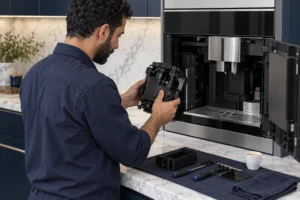
Built-in Thermador coffee machines that stop brewing, leak, froth poorly or flash a fault are diagnosed in your San Francisco kitchen, with…
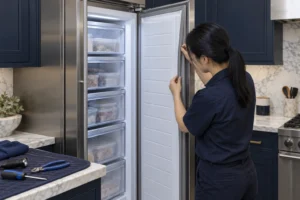
Repair diagnosis for Thermador column freezers with frost buildup, soft food, ice maker trouble or odd noises in San Francisco and Bay…
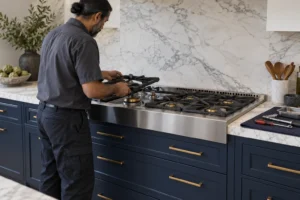
Burners that click without lighting, induction zones that go dark, griddles that stay cold or a glass surface showing a code: we…
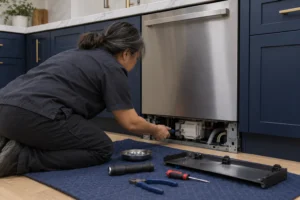
A Thermador dishwasher that leaks, will not drain, shows a fault code or leaves dishes wet is diagnosed in your San Francisco…
Share a few details and we’ll confirm an appointment. Prefer to talk? Call us and we’ll help right away.