

Specialized Thermador Appliance Repair in San Francisco
Mon–Sat: 8:00 AM – 7:00 PM
A griddle section that stays cold, heats unevenly or will not hold its setting is usually a spark, gas or thermostat problem. This article walks through the checks.
Thermador repair · San Francisco & the Bay Area
A griddle on a rangetop is a different animal from a pot burner. It is a large plate heated from below, and it usually has its own control, its own flame or element and its own way of sensing temperature. If your Thermador rangetop includes a griddle section, a cold plate can be a lighting problem, a gas supply problem, a control problem or a plate that is simply coated in something that stops heat from moving. The first step is to work out which kind of “not heating” you have.
You turn the control, there is no flame, and the plate stays cold. This can be a spark issue, a gas issue or an interrupted power supply to the ignition. Listen for the clicking of the igniter. If you hear it and see no flame, treat it like the burner problem described in range burner will not light. If you hear nothing, check the power first.
A griddle flame that disappears as soon as you release the control, or after a short time, suggests the flame is not being detected or is not stable. Residue on the burner under the plate, a blocked port or a draft from a hood can disturb it. Island and downdraft hoods move a lot of air, and a strong draw can push a low flame off its ports.
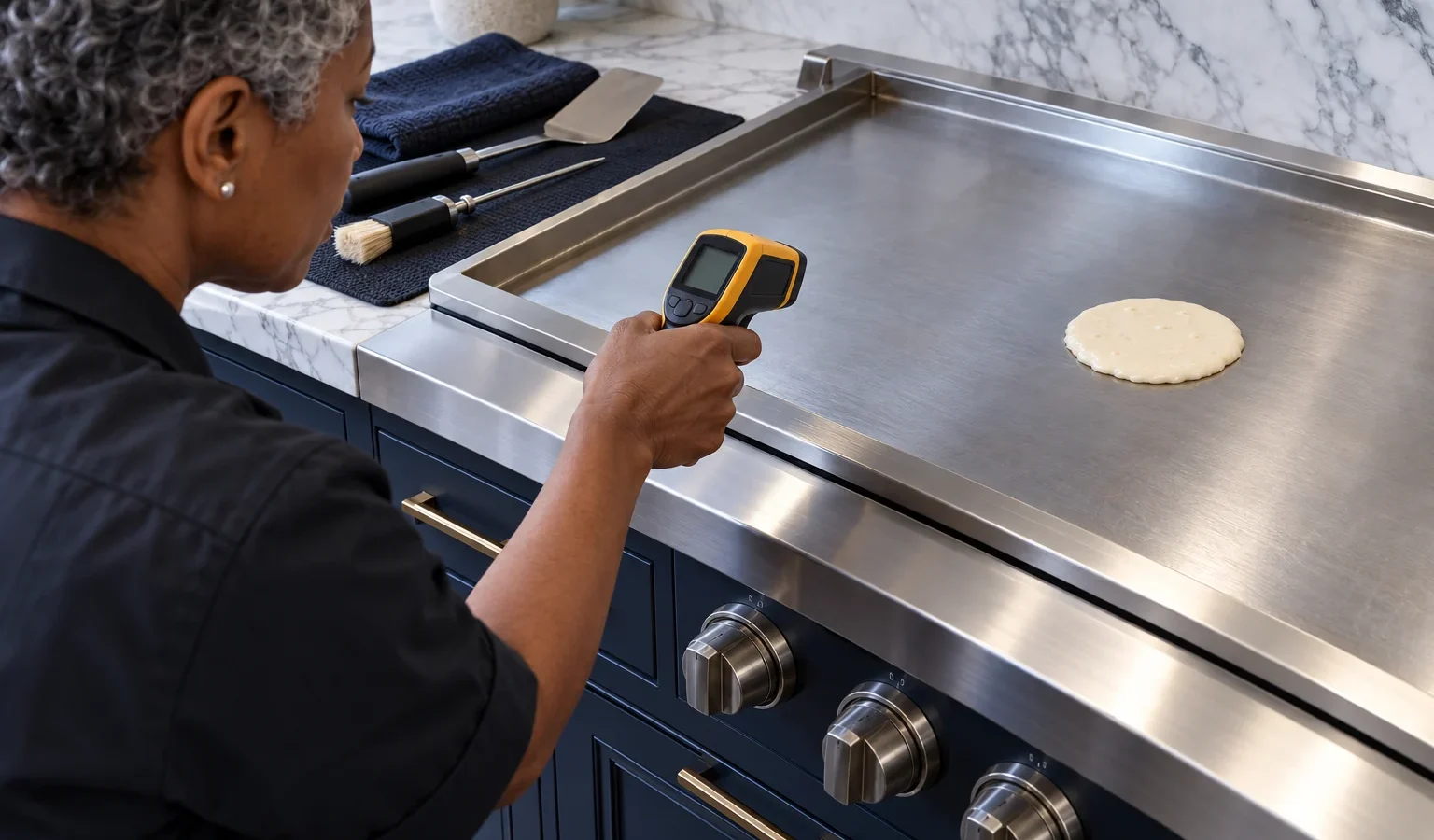
The burner is working, and heat is not arriving. Thick grease, carbonized oil or a plate that has been cleaned with something that left a film can reduce the transfer. A warped plate that no longer sits flat on its supports can also behave oddly. A thermostat or sensor that reads high may reduce the flame before the plate is warm.
Hot spots and cold corners point to an uneven flame, a partly blocked burner, or a plate that is not level. Cabinets and counters in older buildings are not always level, and a rangetop that has settled can pool oil toward one end. That oil changes how the plate heats.
If the plate runs hotter or cooler than the setting suggests, the thermostat or sensing circuit may be failing. Do not trust the dial in that case. Stop using it for anything that needs control.
Gas smell means leave: no switches, no phone in the kitchen, and call the gas utility or 911 from outside.
Rangetops sit in the counter with the burners and valves underneath, often above a cabinet or drawer. Heat and grease collect in those spaces. A hood placed close above a griddle changes how the flame behaves, and a pot filler or splashback nearby may redirect moisture. In a remodel, the gas line is often rerouted, and the regulator or valve position can affect what we can inspect. We always check how the unit is mounted, how it is supplied and how it is vented before we blame a part.
The Thermador PCG305W and PCG364WD are rangetops in our listing. We do not assume features by model number, so we confirm yours from the label, usually on the side of the chassis or under the cooking surface.
We diagnose before any repair. That means checking the supply, the spark, the flame, the sensing and the plate and its seating. We read any code or message on the display and compare it with the codes we work with. You receive a written estimate describing what we found, and nothing is repaired without your approval. If the answer is a thick coating on the plate, we tell you how to deal with it safely instead of selling a part.
For how we handle gas surfaces in general, see Thermador cooktop repair, and for a look at the units we cover, see the cooktop and rangetop guide. If the clicking will not stop, read Star burner keeps clicking. Book when the griddle will not light after the checks above, when the flame is unstable, when it cannot hold a setting, or when you notice any gas odor.
The spark is working and gas is not catching. Blocked ports, a misaligned burner part or a gas valve that does not open are possible causes. Check that the shut-off is open and that nothing is blocking the burner.
Heat may not be moving into the plate because of heavy residue, or the thermostat may be reducing the flame too early. A warped plate can also lose contact with the heat source.
Yes. A strong draw can disturb a low flame. Turn the hood off or to its lowest setting, light the burner, and see whether it holds.
No. If it runs hotter than the setting indicates, stop using it and have the control checked.
It does. Rangetops differ in how the griddle is controlled and supplied, so we confirm the unit from its label before we decide what to test.
Share a few details and we’ll confirm an appointment. Prefer to talk? Call us and we’ll help right away.